History / Windows 3.0 / 1990
The History of Windows Solitaire
A tiny card game helped make the computer mouse feel familiar. Here's how Klondike Solitaire moved from physical cards to one of the most recognized programs on personal computers.
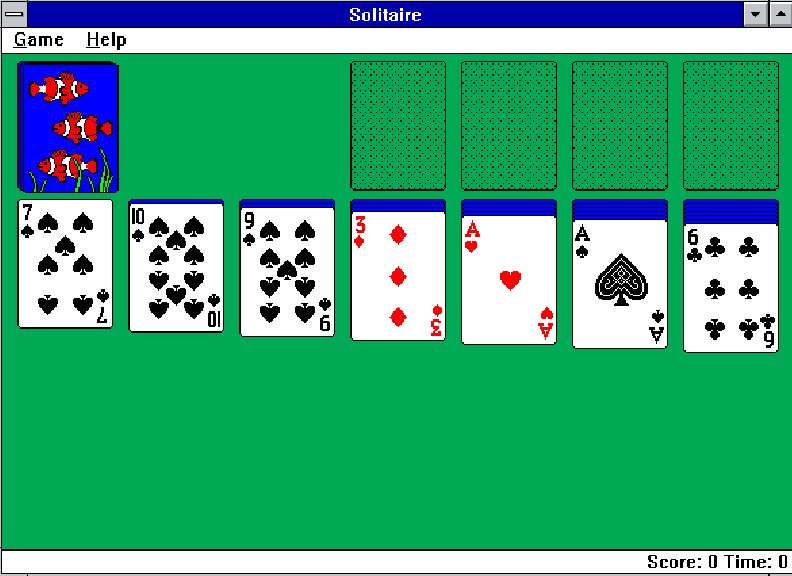
Single-player patience card games existed long before Microsoft Windows. Klondike became one of the best-known versions, with seven tableau columns, a stock and four foundations.
Microsoft included a graphical Klondike game as part of Windows 3.0, released in May 1990. It offered a playful way to practice mouse-based interaction.
Solitaire continued with Windows 3.1. The familiar card table became a common sight on home and office PCs.
As Windows spread, Solitaire reached people who might never have bought a separate computer game.
The Strong National Museum of Play inducted Microsoft Solitaire into the World Video Game Hall of Fame, recognizing its influence and reach.
Who Made Microsoft Solitaire?
Wes Cherry, a Microsoft intern, programmed the Windows version of the game. Designer Susan Kare created its recognizable card artwork. Together, their work turned a traditional card game into a memorable graphical desktop experience.
The mouse was still a new way of interacting with a PC for many people. Picking up cards, clicking, and dragging sequences around the screen made those actions intuitive without feeling like a lesson.
Why Did Microsoft Include a Card Game?
Windows 3.0 represented a more graphical direction for personal computing. Familiar tasks were useful introductions: a card game needed no complex manual, and players learned mouse actions as part of play. The result was entertainment and an informal lesson in using a graphical interface.
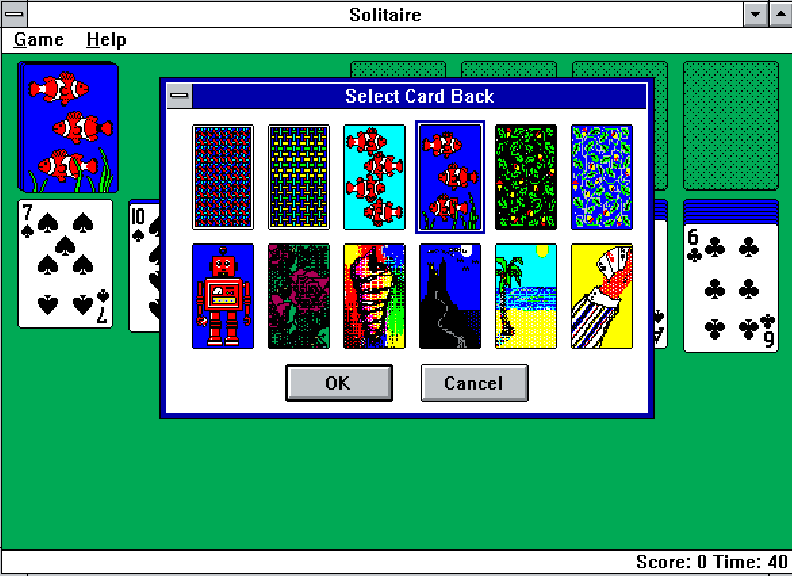
Card Backs, Pixel Art and Personality
Solitaire's recognizable look mattered as much as its rules. On early Windows systems, the little decorative card backs became a point of personal preference. Older versions even featured animations on some card backs when timed play was enabled, including the Robot and Castle designs.
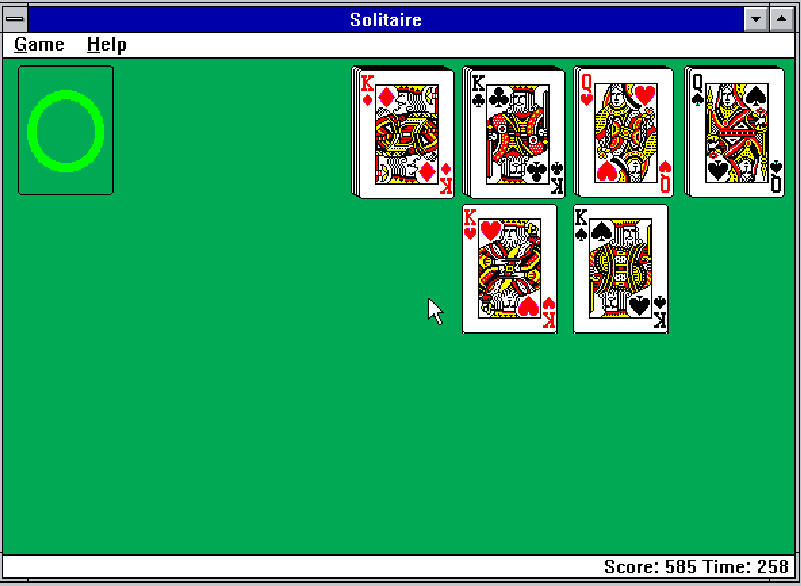
The Winning Card Cascade
One of the most memorable details was the celebratory cascade of playing cards after a completed game. It turned the final move into a little show, and helped make winning feel special even without points or online leaderboards.
How Solitaire Changed Casual Gaming
Solitaire showed that a computer game could succeed without complicated controls, a long commitment or expensive hardware. The game was easy to begin, familiar to card players and short enough to fit into a break. Its success anticipated the broad audience for casual games that would follow.
Sources and Further Reading
For the historical milestones and game credits above, see The Strong National Museum of Play's Microsoft Solitaire profile and Microsoft's 25th-anniversary retrospective. The animated card-back details are also documented in Microsoft Knowledge Base article Q66960.
Need help with the game? Learn the Klondike rules and strategy.